
To stop your ferret from chewing things, remove tempting hazards, block access to problem areas, and redirect their curiosity toward safe, supervised activities. Pay particular attention to rubber, silicone, foam, soft plastic, electrical cords, and damaged fabric: swallowed pieces can cause a life-threatening intestinal blockage. If you think your ferret swallowed something, contact a veterinarian promptly rather than waiting for symptoms.
Why Does My Ferret Chew Everything?
Ferrets explore the world with their noses, paws, and mouths. A new object can be irresistible, especially if it is soft, springy, or easy to drag away. Some ferrets nibble occasionally; others seem determined to taste-test the entire house.
Chewing can be part of normal exploration or play, but persistent chewing may also reflect boredom, stress, or an individual fixation on certain textures. The important question is not just why your ferret is chewing, but what they can reach and whether pieces can be swallowed.
What Things Are Dangerous for Ferrets to Chew?
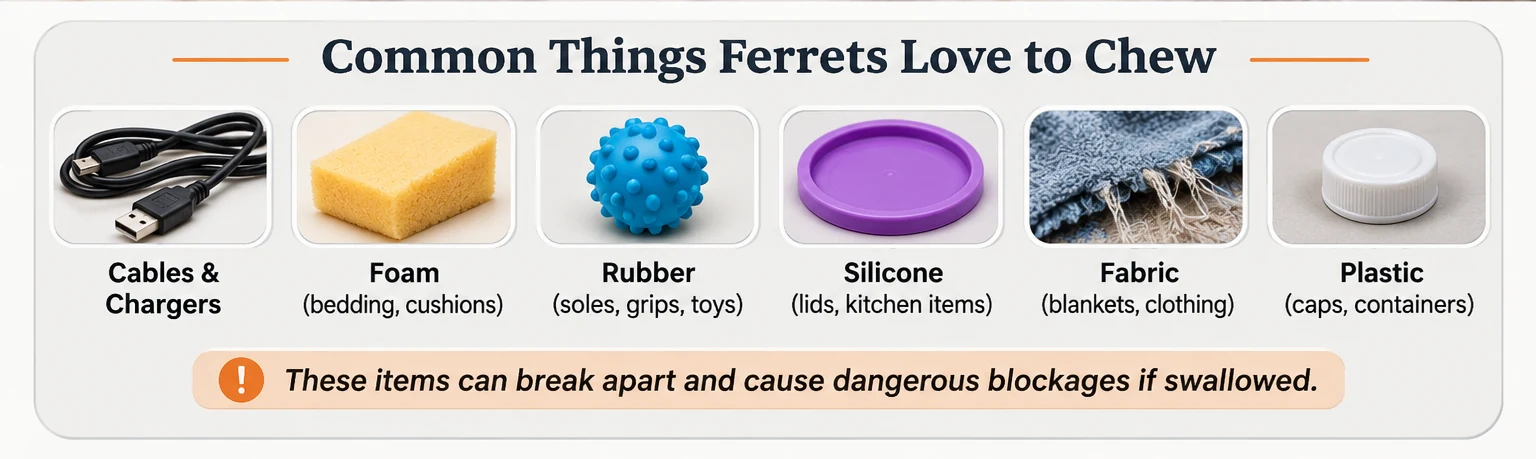
Some common household materials are especially risky because they can break into pieces or be swallowed whole:
- Rubber and silicone: shoe soles, remote-control buttons, grips, gaskets, and flexible kitchen items.
- Foam: cushions, mattress toppers, sponges, and packing material.
- Soft plastic: caps, packaging, and small toy parts.
- Fabric and stuffing: frayed blankets, torn plush toys, and loose threads.
- Electrical cords: chewing can cause burns or electric shock, as well as swallowed fragments.
Even an object sold as a pet toy is not automatically safe for a ferret. Inspect it for small detachable parts and damage, and remove it if your ferret starts tearing pieces off.
How to Stop a Ferret From Chewing Household Items
1. Remove the Temptation
Start with a floor-level inspection of the areas your ferret can access. Put shoes, chargers, remote controls, foam items, and other tempting objects behind secure doors or in closed storage. Check beneath sofas and behind furniture, too.
If your ferret has a favorite target, moving that item completely out of reach is usually more reliable than repeatedly telling them to leave it alone.
2. Ferret-Proof the Play Area
Cover or reroute cables, close gaps, and block access to spaces containing unsafe materials. Choose barriers your ferret cannot squeeze through, climb over, or push aside.
For more household-proofing ideas, see how to stop a ferret from getting under the couch.
3. Redirect to Safer Activities
When your ferret approaches a forbidden object, calmly interrupt and guide them toward an appropriate activity, such as exploring a sturdy tunnel, searching for hidden treats in a supervised game, or investigating a ferret-safe play area.
Choose enrichment that does not shed pieces or invite chewing and swallowing. A supervised ferret dig box can be a useful alternative for a ferret that needs something interesting to do.
4. Rotate Enrichment and Supervise Play
Introduce variety without overcrowding the play area. Rotate safe toys and activities, offer opportunities to explore, and watch how your ferret uses each item. Remove anything they begin to shred or ingest.
Don’t rely on bitter sprays or other deterrents as your main safety measure. Products can be unsuitable for ferrets, and even an unpleasant taste may not stop a determined chewer. Physical removal of the hazard is the priority.
What If My Ferret Keeps Chewing Its Bedding?
Check hammocks, fleece, and beds frequently. If you find holes, missing pieces, or loose threads, remove the damaged item immediately. Try a different bedding style and supervise until you know whether your ferret leaves it intact.
Some ferrets can safely use fabric bedding; others repeatedly chew it. The safest choice depends on your individual ferret’s behavior, not just the product label.
What Happens If a Ferret Swallows Rubber or Foam?
Swallowed objects can become lodged in the stomach or intestines. A blockage is a veterinary emergency and can require urgent treatment or surgery.
Warning signs may include vomiting or retching, reduced appetite, lethargy, abdominal discomfort, unusual stools, or difficulty passing stool. Symptoms can vary, and a ferret may initially appear normal.
If you saw your ferret swallow a foreign object, or strongly suspect it, contact an exotic-animal veterinarian or emergency veterinary clinic immediately. Do not induce vomiting, give laxatives, or attempt home remedies unless a veterinarian specifically directs you to do so.
Can You Train a Ferret Not to Chew?
You can encourage better habits through consistent redirection and rewarding safe exploration, but training is not a substitute for ferret-proofing. Ferrets are curious and quick, and a moment of unsupervised access may be enough for trouble.
Avoid punishment, yelling, or startling your ferret. Focus on setting up the environment so the safest choice is also the easiest one.
The Simple Fix
Remove rubber, foam, cords, and other swallowable materials from your ferret’s reach. Secure the play area, supervise exploration, and offer engaging activities that your ferret cannot easily tear apart. If something goes missing and you suspect it was swallowed, call a veterinarian promptly.
Your ferret may still insist that the remote-control buttons are the finest delicacy in the house. Fortunately, you get to decide what’s on the menu.